
Folk Psychology as Mental Simulation
Folk psychology is the capacity to understand and interact with other agents. Until recently, it was commonly held in both philosophy and cognitive science that folk psychology is mainly underwritten by mindreading—i.e., the ability to represent what an agent thinks, feels, and wants, and to interpret and anticipate their behavior in light of those mental state attributions (Stich and Ravenscroft 1994).[1] For example, when we see that a student is walking up and down the department hallway, we infer that they are trying to find a certain room and do not know where that room is. On this basis, we stop them to offer assistance in locating the room.
This widespread assumption also shaped the Simulation Theory (ST), which was traditionally conceived of as a theory of mindreading (Davies and Stone 1998). Common sense has it that, in many circumstances, we arrive at representing others’ mental states by taking their perspective. For example, we understand the student’s behavior by putting ourselves in their shoes, imagining what we would think or want in that situation. ST takes this common-sense idea seriously and develops it into a fully-fledged theory. At the core of the theory, we find the thesis that mental simulation plays a central role in mindreading: We typically arrive at representing others’ mental states by simulating these states in our own mind and, on this basis, form predictions about, or explain, their behavior. The basic idea of ST is therefore that if the resources our own brain uses to guide our own behavior can be modified to work as representations of other people’s mental states, then we have no need to store general information about what makes people tick: We just do the ticking for them. Accordingly, ST challenges the Theory-Theory of mindreading (TT), the view that a tacit psychological theory underlies the ability to represent and reason about others’ mental states.
In this entry, we will discuss the debate between TT and ST. We will also discuss an outside challenge to this rivalry. Mindreading is no doubt an important skill in our folk psychological toolkit, as it enables us to navigate complex social interactions involving, e.g., irony, sarcasm, pretense, deception, and manipulation (Currie 2002; Leslie 1994; Nichols and Stich 2003). However, advocates of Pluralistic Folk Psychology maintain that mindreading, including simulation-based mindreading, has been overemphasized in the study of folk psychology. Folk psychology is, on this view, much broader than simply attributing mental states and explaining and predicting behavior. Proponents of Pluralistic Folk Psychology propose that behavioral scripts, stereotypes, and norms play a much larger role in our social interactions than mental state attribution, and that our interactions are often aimed at shaping or regulating others’ thoughts and behavior rather than explaining and predicting them (Andrews, Spaulding, and Westra 2021).
We will start by considering what mental simulation is (Section 1) and its cognitive architecture (Section 2). We will then explore its role in mindreading (Section 3) and in a broader, more pluralistic folk psychology (Section 4).
- 1. What is Meant by ‘Mental Simulation’?
- 2. Two Types of Mental Simulation
- 3. The Role of Mental Simulation in Mindreading
- 4. Mental Simulation and Pluralistic Folk Psychology
- Bibliography
- Academic Tools
- Other Internet Resources
- Related Entries
1. What is Meant by ‘Mental Simulation’?
The idea that we understand other people by simulating their mental states has a distinguished history in philosophy and the human sciences. Robert Gordon (1995) traces it back to David Hume (1739) and Adam Smith’s (1759) notion of sympathy; Jane Heal (2003) and Gordon (2000) find simulationist themes in the Verstehen approach to the philosophy of history (e.g., Dilthey 1894 [1977]); Alvin Goldman (2006) considers Theodor Lipps’s (1903) account of empathy (Einfühlung) as a precursor of the notion of mental simulation.
In its modern guise, the Simulation Theory (ST) was established in 1986, with the publication of Gordon’s “Folk Psychology as Simulation” and Heal’s “Replication and Functionalism”. Goldman was also an early defender of ST (Goldman 1989) and has done much to give the theory its prominence (Gallese and Goldman 1998; Goldman 2006). Other influential philosophical proponents of ST include Gregory Currie (Currie & Ravenscroft 2002) and Susan Hurley (2005). These scholars all hold that the core process of folk psychology is mental simulation, or mentally re-creating a target’s mental states. Here’s how Currie & Ravenscroft (2002) explain this general idea:
Imagination enables us to project ourselves into another situation and to see, or think about, the world from another perspective. These situations and perspectives … might be those of another actual person, [or] the perspective we would have on things if we believed something we actually don’t believe, [or] that of a fictional character. … Imagination recreates the mental states of others. (Currie & Ravenscroft 2002: 1, emphasis added).
Thus, according to ST, empathizing with John’s sadness consists of mentally simulating (or re-creating) his sadness, and adopting Mary’s political point of view consists of mentally simulating (or re-creating) her political beliefs. This is the intuitive sense of ‘mental simulation’ that simulation theorists have in mind. These scholars, however, disagree about what exactly counts as a mental simulation/re-creation.
Some simulation theorists think of mental simulation in terms of resemblance: Your visual imagery of an apple simulates John’s visual experience of an apple to the extent that it resembles John’s mental state (Heal 1986, 2003; Goldman 2006, 2008a)—where resemblance is typically characterised in terms of similarity of functional role, content, phenomenology, or neural basis (cf. Fisher 2006). More generally:
RESEMBLANCE
Mental state M* is a mental simulation of mental state M if and only if:
- M* resembles M in some significant respects;
- In resembling M, M* fulfils one of its functions.
Hurley (2008), however, argued that RESEMBLANCE fails to distinguish ST from its main competitor, i.e., the Theory-Theory (TT), according to which folk psychology depends on a body of information about others’ mental states and processes (See 3.4 below). Suppose that visualization works like a computer simulation and generates its outputs on the basis of a body of information about vision. In a case like that, RESEMBLANCE would still categorise your visual image of an apple as a mental simulation of John’s visual experience of an apple, even though your visual image has been generated by a theory-driven process.
Hurley (2005, 2008) proposes that the solution to this problem is to instead conceive of mental simulation in terms of re-use (see also Gallese & Sinigaglia 2011). According to this view, what makes your visual imagery of an apple a mental simulation of John’s visual experience is that whereas the latter is generated by the visual system performing its primary function, the same cognitive system in you is performing a non-primary function. More generally:
RE-USE
Mental state M* is a mental simulation of mental state M if and only if:
- M is generated by the use of a cognitive mechanism of type C (that is, in producing M, C is performing its primary function);
- M* is generated by the re-use of a cognitive mechanism of type C (that is, in producing M*, C is performing a non-primary function).
According to Hurley, RE-USE is superior to RESEMBLANCE because it correctly predicts that (A), but not (B), is a mental simulation of a visual experience: (A) a visual image generated by the re-use of the visual system; (B) a visual image generated by an information-rich process of the kind implemented by computer simulations.
While the resemblance vs re-use divide generated a lively debate in the past, many simulation theorists have come to accept that the two views can be naturally combined (Currie and Ravenscroft 2002; Goldman 2012):
RE-USE + RESEMBLANCE
Mental state M* is a mental simulation of mental state M if and only if:
- M is generated by the use of a cognitive mechanism of type C;
- M* is generated by the re-use of a cognitive mechanism of type C;
- M* resembles M in some significant respect.
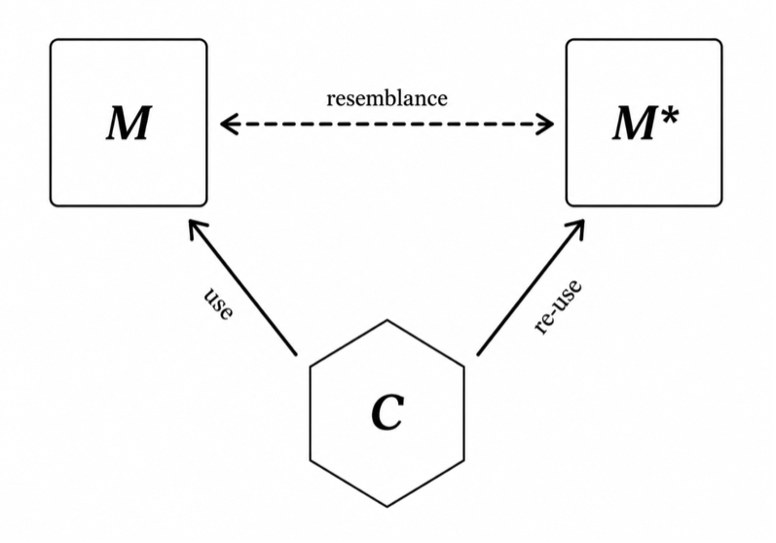
FIGURE 1. Mental simulation as RE-USE + RESEMBLANCE
This combination of RE-USE and RESEMBLANCE has significant virtues. First, it inherits from RESEMBLANCE the intuitive constraint that a mental simulation needs to resemble its target—after all, it would be odd to say that your visual imagery of an apple is a mental simulation of John’s visual experience of the Golden Gate Bridge. Second, it inherits from RE-USE the plausible idea that mental simulations are “pretend” (“as if”, “quasi”) states—imperfect copies of, surrogates for, the “genuine” states normally produced by a certain cognitive mechanism, obtained by taking this cognitive mechanism “off-line”. Consider the following case. Frank desires to drink a coffee and believes that he can buy one at Central Café. When he feeds these mental states into his decision-making mechanism, the mechanism outputs the decision to go to the café. In this case, Frank’s decision-making mechanism was “on-line”—i.e., he used it; he employed it for its primary function. My situation is different. I don’t desire to drink a coffee, nor do I believe that I can buy one at Central Café. Still, I can imagine believing and desiring so. When I feed these imagined states into my decision-making mechanism, I am not employing it for its primary function. Rather, I am taking it off-line (I am re-using it). As a result, the mechanism produces a mere pretend decision to go to the café: All else being equal, Frank’s decision to go to Central Café will cause him to go there; on the contrary, no such behaviour will result from my simulated decision.
Given this, we shall adopt RE-USE + RESEMBLANCE as our working definition of ‘mental simulation’. It should, however, be noted that not all simulation theorists subscribe to it.
For example, Heal (1994) pointed out the following problem with tying ST to the notion of re-use. Suppose that the human mind contains two distinct decision-making mechanisms: Mec1, which takes beliefs and desires as input, and generates decisions as output; and Mec2, which works by following exactly the same principles as Mec1, but takes imagined beliefs and imagined desires as input, and generates imagined decisions as output. Consider again Frank’s decision to go to Central Café and my imagined decision to do so. If the two-mechanism hypothesis is correct, then RE-USE + RESEMBLANCE predicts that my imagined decision does not count as a mental simulation of Frank’s decision, given that the former was not generated by reusing the same type of cognitive mechanism that generated the latter. But this, Heal contends, is surely the wrong verdict. Hence, she concludes, an account of ‘mental simulation’ should not contain any commitment about cognitive mechanisms. (For a reply to this worry, see Currie and Ravenscroft 2002). We will set aside this worry going forward and explore how the concept of mental simulation is used in various debates.
2. Two Types of Mental Simulation
Now that we have a definition of ‘mental simulation’, let’s consider which mental states satisfy it, if any. For example, is it the case that visual images are mental simulations of visual experiences? What about decisions, emotions, beliefs, desires, and bodily sensations? Can they be mentally simulated? One might also wonder about memory, as simulation theorists have proposed that episodic memory is a mental simulation of the personal past (Michaelian 2016; Shanton and Goldman 2010).
Following Goldman (2006), it has become customary among simulation theorists to argue for the existence of two types of mental simulation: high-level and low-level (but see de Vignemont 2009). Our presentation will follow suit.
2.1 High-Level Simulation
High-level simulations are characterised as typically under voluntary control and stimulus-independent. Here are some mental states that, according to simulation theorists, qualify as high-level simulations: visual imagery (Currie 1995; Currie & Ravenscroft 2002; Goldman 2006); motor imagery (Currie & Ravenscroft 1997, 2002; Goldman 2006); decision-like imaginings and belief-like imaginings (Currie & Ravenscroft 2002); desire-like imaginings (Currie 2002). In what follows, we shall consider a couple of them in some detail.
Visualizing first. There might be cases in which visual imagery is not under voluntary control or is stimulus-dependent. However, one can typically decide to visualize (or stop visualizing) something, and this process is often not driven by perceptual stimuli. These features are what make visual imagery an example of a high-level cognitive state. Proponents of ST also make the case that visual imagery is simulational, i.e., it is a state that resembles visual perception and is produced by the re-use of the visual system. To this effect, simulation theorists have resorted to the following lines of evidence (Currie 1995; Currie & Ravenscroft 2002; Goldman 2006):
- visualizing recruits some of the brain areas involved in vision (Kosslyn et al. 1999);
- left-neglect patients have the same deficit in both seeing and visualizing—i.e., they do not have perceptual experience of the left half of the visual space and they also fail to visually imagine the left half of the imagined space (Bisiach & Luzzatti 1978);
- ocular movements occurring during visualizing approximate those happening during seeing (Spivey et al. 2000);
- some patients systematically mistake visual images for perceptual states (Goldenberg et al. 1995);
- visual perception and visualizing exhibit similar patterns of information-processing (facilitations, constraints, illusions) (Decety & Michel 1989; Kosslyn et al. 1999).
In recent years, some of this purported evidence has attracted criticism. For example, contra i, Winlove et al. (2018) argued that the data concerning the involvement of the visual cortex (in particular, V1) in visualising are inconsistent; and, against ii, Spagna et al. (2021) claimed that vision and visual imagery doubly dissociate (cf. Cavedon-Taylor (2021) for a philosophical discussion).
Let’s now consider imagining believing. I don’t believe that Rome is in France, but I can imagine believing it. Imagining believing is typically stimulus-independent and voluntary. For it to count as an instance of high-level simulation, it also needs to (A) resemble genuine belief, and (B) be generated by the re-use of the “the belief-forming mechanism”. Currie and Ravenscroft (2002) argue that (A) is the case: Belief-like imaginings have the same content and a similar functional role to their genuine counterparts. For example, the belief that Rome is in France and the belief-like imagining that Rome is in France have the same propositional content, namely, that Rome is in France. Moreover, from the belief-like imagining that Rome is in France and the genuine belief that French is the language spoken in France, one can infer the belief-like imagining that French is the language spoken in Rome (but see Nichols 2006b).
Direct evidence bearing on (B) is scarce. In its defence, simulation theorists have given indirect arguments along the following lines: If both genuine beliefs and belief-like imaginings are generated by the same cognitive mechanism, we have an explanation of why the latter resemble, and are inferentially integrated with, the former. It is also the case that novel cognitive mechanisms are costly to build and maintain. Thus, it is not implausible that neural reuse could be a key organizational principle of the brain: Several cognitive capacities, including belief-like imagining, might be the result of redeploying a pre-existing mechanism for a non-primary function (Anderson 2015). Here’s how Currie & Ravenscroft (2002) develop this argument with respect to the cognitive underpinnings of both theoretical and practical reasoning:
There is, let us assume, a mechanism dedicated to forming decisions on the basis of our beliefs and desires. … This mechanism can … be run ‘off-line’, disconnected from action-generating systems. … One alternative is … that there are in fact two distinct but similar mental mechanisms ….
There are two reasons … why the simulation theorists should prefer [the single mechanism hypothesis]. The first reason is that the postulation of two mechanisms is less economical than the postulation of one. … The second reason … is this: we have very good reason to think that imagination-based decision-making does not operate in isolation from the subject’s real beliefs and desires. … And the same is true of theoretical reason; … imagination-based inferences … draw on knowledge of, or at least beliefs about, the real world. … If imagination and belief operated under a system of inferential apartheid—as the two-mechanisms view has it—how could this happen? (Currie & Ravenscroft 2002: 67–68).
In addition to being under voluntary control and stimulus-independent, high-level simulations share another important feature, according to simulation theorists—namely, they are all under the control of imagination (more precisely, Currie & Ravenscroft (2002) talk of Re-Creative Imagination, while Goldman (2006, 2009) uses the expression “Enactment Imagination”):
What is distinctive to high-level simulation is the psychological mechanism … that produces it, the mechanism of imagination. This psychological system is capable of producing a wide variety of simulational events: simulated seeings (i.e., visual imagery), … simulated motor actions (motor imagery), simulated beliefs, … and so forth. … In producing simulational outputs, imagination does not operate all by itself. … For example, it recruits parts of the visual system to produce visual imagery …. Nonetheless, imagination “‘takes the lead”’ in directing or controlling the other systems it enlists for its project. (Goldman 2009: 484–85).
Here is another way to make the point. We already know that, according to ST, visual imagery is implemented by the re-use of the visual system. In the above passage, Goldman adds that the re-use of the visual system is initiated, guided, and controlled by imagination. The same applies, mutatis mutandis, to all cases of high-level simulation (Goldman 2012b, Goldman & Jordan 2013). For example, in imagining hearing, imagination “gets in control” of the auditory mechanism, takes it off-line, and (re)uses it to generate simulated auditory experiences.
If Goldman is right, and all high-level simulations depend on imagination, we can explain why, in our common parlance, we tend to describe these mental simulations in terms of imaginings, images, imagery, etc. More importantly, we can also explain why high-level simulations are under voluntary control and stimulus-independent. These are, after all, typical properties of imagination.
2.2 Low-Level Simulation
Whereas high-level simulations are typically voluntary and stimulus-independent, low-level simulations are characterized as typically automatic and stimulus-driven. What mental states are, according to ST, instances of low-level simulation? The answer can be given in two words: mirror states. What are these?
Through single-cell recording experiments, it was discovered that the activity of neurons in the area F5 of the macaque monkey ventral premotor cortex is correlated with goal-directed motor actions and not with particular movements (Rizzolatti et al. 1988). For example, some F5 neurons fire when the monkey grasps an object, regardless of whether the monkey uses the left or the right hand. A plausible interpretation of these results is that neurons in monkey area F5 encode motor intentions (i.e., those intentions causing and guiding actions like reaching, grasping, holding, etc.) and not kinematic instructions (i.e., those representations specifying the fine-grained motor details of an action). (In-depth philosophical analyses of the notion of motor intention can be found in Brozzo 2017; Butterfill & Sinigaglia 2014; and Mylopoulos & Pacherie 2019).
Subsequent studies revealed that a portion of F5 neurons not only fire when the monkey performs a certain goal-directed motor action (say, bringing a piece of food to the mouth), but also when it sees another agent performing the same (type of) action (di Pellegrino et al. 1992; Gallese et al. 1996; Rizzolatti et al. 1996). A subset of these neurons activated even when the end-state of the observed action was hidden. For example, a subset of these mirror neurons–“logically-related neurons”– would activate for mouth-related actions when a target picked up a food item in a particular way even when the eating was hidden from observation (Iacoboni et al. 2005). For this reason, these neurons were called “mirror neurons”, and it was proposed that they encode motor intentions both during action execution and action observation (Rizzolatti & Sinigaglia 2007, 2016). Later studies suggested that an action mirror mechanism also exists in the human brain (for reviews, see Rizzolatti & Craighero 2004, and Rizzolatti & Sinigaglia 2016). In fact, it appears that there are mirror mechanisms in the human brain outside the action domain as well: a mirror mechanism for disgust (Wicker et al. 2003), one for pain (Singer et al. 2004; Avenanti et al. 2005), and one for touch (Blakemore et al. 2005). A mirror state is simply the mental state generated by the activation of a mirror mechanism in the perception mode (Goldman 2008b): When, say, your action mirror mechanism gets activated because you are seeing someone grasping a mug, you are undergoing a mirror state.
Are mirror states low-level simulations? They surely are low-level, since they are both automatic and stimulus-driven responses. But do they qualify as mental simulations? Consider mirror disgust. Wicker et al. (2003) carried out an fMRI study in which participants first observed videos of disgusted facial expressions and subsequently underwent a disgust experience via inhaling foul odorants. It turned out that the same neural area—the left anterior insula—that was preferentially activated during the experience of disgust was also preferentially activated during the observation of the disgusted facial expressions. Since mirror disgust involves re-using the left anterior insula for a non-primary function and resembles genuine disgust, simulation theorists argued that it is a form of mental simulation (Goldman 2008b). However, critics of ST suggested that mirror states are better characterised as enactive perceptions (Gallagher 2007) or as the output of an information-rich process (Herschbach 2012; Spaulding 2012) (see 3.2 below).
3. The Role of Mental Simulation in Mindreading
3.1 The causation vs. constitution debate
ST has been traditionally conceived of as a theory of mindreading: According to simulation theorists, mental simulation plays a central role in mental state attributions. Some simulation theorists defend a strong reading of this claim, and they propose that mindreading is often (entirely) constituted by mental simulation (Gordon 1986, 1995, 1996; Gallese et al. 2004; Gallese & Sinigaglia 2011). In other words, they argue that, on many occasions, the fact that a subject, S, is representing a target’s, T, mental states is nothing over and above the fact that S is simulating T’s mental states.
The most prominent version of this position is Gordon’s (1995, 1996) Radical Simulationism. Suppose that I want to represent the mental state that an individual—call him “Mr Tees”—is in right now. Gordon maintains that it is a mistake to think that the only thing that I can do is to simulate myself in Mr Tees’s situation. It is in fact also possible for me to simulate Mr Tees in his situation. And if I do so, my very simulation of Mr Tees constitutes a representation of his mental state:
To simulate Mr Tees in his situation requires an egocentric shift, a recentering of my egocentric map on Mr Tees. He becomes in my imagination the referent of the first-person pronoun “I”. … Such recentering is the prelude to transforming myself in imagination into Mr Tees as much as actors become the characters they play. … But once a personal transformation has been accomplished, … I am already representing him as being in a certain state of mind. (Gordon 1995: 55–56)
Gordon’s view has received the following criticism (Fuller 1995; Heal 1995; Goldman 2008b; Jacob 2008, 2012): Mindreading involves the judgement, or the belief, that another subject has a certain mental state. Given this, mental simulation falls short of fully-fledged mindreading—one thing is to visually imagine what someone else is seeing; quite another is to judge that they are seeing that.
Those simulation theorists who are persuaded by this argument claim that mental simulation causally contributes to, rather than constitutes, mindreading. The best developed version of this view is Goldman’s (2006), which characterises simulation-based mindreading as a three-stage process: First, a subject generates a mental simulation; second, they introspect and categorize this simulated mental state; finally, they attribute the categorized mental state to a target via a judgment. An example should help get Goldman’s idea across. Suppose Lisa sees John making a disgusted facial expression, and this triggers a mirror disgust experience in her. Lisa then introspects her simulated mental state and categorizes it as a disgust experience. This, in turn, is followed by the formation of the judgment John is having a disgust experience. It is only this last stage of Lisa’s cognitive process that counts as mindreading. On the other hand, the previous two stages (including the initial mental simulation of John’s disgust) were merely causal contributors to it.
3.2 The Mirror Neurons Controversy
Some authors grant that mirror states are mental simulations but challenge the idea that they contribute to mindreading. In particular, this challenge has been raised with respect to the role of mirror states in “action understanding” (i.e., the interpretation of an agent’s behavior in terms of the agent’s intentions, goals, etc.). After all, the neuroscientific evidence just indicates that action mirroring correlates with episodes of action understanding: There are no studies examining whether disruption of the monkey mirror neuron circuit results in action understanding deficits, and the evidence on human action understanding following damage to the action mirror mechanism is inconclusive at best (Hickok 2009). In this regard, some authors have suggested that the most plausible hypothesis is that action mirroring follows the understanding of others’ mental states (Csibra 2007; Jacob 2008). For example, Jacob (2008) proposes that the job of mirroring in the action domain is just that of computing a representation of the observed agent’s next movement, on the basis of a previous representation of the agent’s intention. (Similar deflationary accounts of the action mirror mechanism have been given by Brass et al. 2007, Hickok 2014, and Vannuscorps and Caramazza 2015).
There are various ways to respond to these criticisms. A stronger response argues that they are based on a misunderstanding of the relevant empirical findings (Rizzolatti & Sinigaglia 2010, 2014, 2023). A weaker response holds that the focus on action understanding is a bit of a red herring, given that the most robust evidence in support of the central role played by mirror states in mindreading comes from the emotion domain (Goldman and Sripada 2005; Goldman 2008b). Consider again the case of mirror disgust. Huntington’s Disease (HD) is a neurodegenerative disorder resulting in damage to the disgust mirror mechanism. Importantly, not only does this damage result in individuals with HD having difficulties in experiencing disgust, but also in an impairment in attributing disgust to someone else. Based on this pattern of impairments, Barlassina (2013) argues that HD supports the hypothesis that mirror disgust plays a key role in disgust mindreading.
In sum, while research on mirror neurons/mirroring mechanisms has transformed ST by suggesting that some forms of mindreading may depend on automatic neural processes that re-use perceptual, motor, and affective systems (see Section 2.2 above), significant controversies remain. Future work will likely focus on clarifying the cognitive function of mirror neurons/mechanisms and determining their role in mindreading. Empathy provides a useful example here. Empathy is the mental simulation of a target’s emotions (or, more generally, affective states). Mirror neurons seem to play a crucial role in empathy insofar as they physically implement the simulation of a target’s affective state (Singer et al. 2004). However, this does not settle the role of mirror neurons in mindreading, since it’s up for debate whether there is some prior understanding of a target’s emotion that enables empathy (and the mirror neuron activation that neurally implements empathy). See Spaulding (2012) for a discussion of the empirical evidence and theoretical arguments.
3.3 Self and Others
According to ST, we reuse our own cognitive mechanisms to arrive at a representation of other people’s mental states. This claim raises a number of issues concerning how ST conceptualizes the self-other relation.
Gallagher (2007: 355) writes that “given the large diversity of motives, beliefs, desires, and behaviours in the world, it is not clear how a simulation process … can give me a reliable sense of what is going on in the other person’s mind.” ST has a two-pronged answer to Gallagher’s challenge. First, human beings are very similar with regard to cognitive processes such as perception, theoretical reasoning, practical reasoning, etc. For example, there is a very high probability that if both you and I look at the same scene, we will have the same visual experience. This explains why, in the large majority of cases, I can successfully simulate your visual experiences.
Second, even though we are quite good at recognizing others’ mental states, we are nonetheless prone to egocentric errors, i.e., we tend to attribute to a target the mental state that we would undergo if we were in the target’s situation, rather than the actual mental state the target is in (Goldman 2006). A standard example is the curse of knowledge bias, where we take for granted that other people know what we know (Birch & Bloom 2007). ST has a straightforward explanation of such egocentric errors (Gordon 1995; Goldman 2006): If we arrive at attributing mental states via mental simulation, the attribution accuracy will depend on our capacity to “quarantine” our genuine mental states when they do not match the target’s, and to replace them with more appropriate mental simulations. This “adjustment” process, however, is a demanding one, because our genuine mental states exert a powerful tendency. Thus, Gallagher is right when he says that, on some occasions, “if I project the results of my own simulation onto the other, I understand only myself in that other’s situation, but I don’t understand the other.” (Gallagher 2007: 355). However, given how widespread egocentric errors are, this counts as a point in favour of ST, rather than as an argument against it (but see de Vignemont & Mercier 2016, and Saxe 2005).
Things, however, get trickier when simulating desires that differ significantly from our own (there is a substantial literature on mental simulation of desires—Doggett & Egan 2007; Funkhouser & Spaulding 2009; Kieran & Lopes 2003; Nichols 2006a, 2006b; Nichols & Stich 2003; Spaulding 2015; Velleman 2000). If we use our own minds as a model for others–reusing our own cognitive mechanisms to recreate a pretend desire–it may be particularly difficult to simulate a desire that is irrational, immoral, or otherwise inconsistent with our background beliefs and commitments. Quarantining our own mental states does not fully solve the problem, since it does not account for how we successfully explain and predict desires that differ significantly from the desires that would be plausible within our psychologies. It seems that we need to rely on general folk psychological information about people, particular cultures, perhaps psychopathologies, etc. to correctly explain and predict the divergent desires. If that’s right, it seems to suggest that correctly predicting others’ desires at least sometimes requires substantial non-simulational processes.
Carruthers (1996, 2009, 2011) raises a different problem for ST: It cannot adequately account for self-attributions of mental states. Recall that, according to Goldman (2006), simulation-based mindreading is a three-stage process in which we first mentally simulate a target’s mental state, we then introspect and categorize the simulated mental state, and we finally attribute the categorized state to the target via a judgment. Since Goldman’s model has it that attributions of mental states to others depend on the ability to introspect one’s own mental states, it predicts that: (A) introspection is (ontogenetically and phylogenetically) prior to the ability to represent others’ mental states; (B) there are cases in which introspection works just fine, but where the ability to represent others’ mental states is impaired (presumably, because the mechanism responsible for projecting one’s mental states to the target is damaged). Carruthers (2009) argues that neither (A) nor (B) are borne out by the data.
How might a simulation theorist respond to this objection? One possibility is to embrace Gordon’s (1986, 1995, 1996) Radical Simulationism, which, as seen above, has it that mindreading often just requires mentally simulating another’s mental state, without the need for introspection or judgment. But what about those cases in which we do form a judgment about someone else’s mental state? Interestingly, Gordon (1986, 1995) argues that introspection plays no role in the generation of these judgments either. Gareth Evans (1982) famously argued that we answer the question “Do I believe that p?” by answering another question, namely “Is it the case that p?” In other words, according to Evans, we ascribe beliefs to ourselves not by introspecting, or by “looking inside”, but by looking “outside” and trying to ascertain how the world is. Gordon maintains that this self-ascription strategy—which he labels “the ascent routine” (Gordon 2007)—is also the strategy that we employ, in the context of a simulation, to determine the mental states of the simulated agent:
In a simulation of O, I settle the question of whether O believes that p by simply asking … whether it is the case that p. That is, I simply concern myself with the world—O’s world, the world from O’s perspective. … Reporting O’s beliefs is just reporting what is there. (Gordon 1995: 60)
Carruthers (1996, 2011) raises this challenge for Gordon’s ascent routine proposal:
This suggestion appears to have only a limited range of application. For even if it works for the case of belief, it is very hard to see how one might extend it to account for our knowledge of our own goals, decisions, or intentions—let alone our knowledge of our own attitudes of wondering, supposing, fearing, and so on. (Carruthers 2011: 81)
Carruthers’ objections highlight a key constraint for a theory of mindreading: Anybody who puts forward an account of how we attribute mental states to other people should remember that such an account has to cohere with a plausible story about the cognitive mechanisms underlying self-attribution (see the SEP entries on self-knowledge and on introspection).
3.4 Simulation Theory and the Theory-Theory
ST is only one of several accounts of mindreading on the market. The main rival of ST is the Theory-Theory (TT) (Gopnik & Wellman 1992; Gopnik & Meltzoff 1997; Leslie 1994; Scholl & Leslie 1999). According to TT, mindreading is grounded in the possession of a Theory of Mind—i.e., it is based on the tacit knowledge of “folk” laws or principles connecting mental states with sensory stimuli, behavioural responses, and other mental states. A putative example is the Law of the practical syllogism: If S desires a certain outcome G and S believes that by performing a certain action A she will obtain G, then ceteris paribus S will decide to perform A. If I know this law, and I also know (or believe) that you desire to eat strawberries and that you believe that there are strawberries in the kitchen, I can then infer that you will decide to go to the kitchen.
The difference between TT and ST can be illustrated through an example from Stich and Nichols (1992). Suppose that you want to predict the behavior of an airplane in certain atmospheric conditions. You can collect the specifications of the airplane and infer, on the basis of aerodynamic theory, how the airplane will behave. Alternatively, you can build a model of the airplane and run a simulation. The former scenario approximates the way in which TT describes mindreading, while the latter approximates ST. Two points need to be stressed, though. First, while knowledge of aerodynamic theory is explicit, TT says that our knowledge of the Theory of Mind is typically implicit (or tacit). That is, someone who knows aerodynamic theory is aware of the theory’s laws and principles and is able to report them correctly, while the laws and principles constituting one’s Theory of Mind typically lie outside awareness and reportability. Second, when we run a simulation of someone else’s mental states, we do not need to build a model: we are the model—that is, we use our own mind as a model of others’ minds. For that reason, ST predicts that mindreading will be subject to egocentric errors—that is, it predicts that we will often attribute to a target the mental state that we would have if we were in the target’s situation, rather than the state the target is actually in (See Section 3.3). Empathy offers support to this prediction. Empathy is clearly simulational—it is the process of mentally simulating a target’s affective experiences (Ravenscroft 1998). And, of course, there are predictable egocentric errors that occur when empathizing: We fail to quarantine our knowledge, desires, or values; we find it challenging to empathize with those who are very different from us, etc. (Bloom 2017, Prinz 2011).
Simulation theorists have given parsimony arguments against TT, as well: There is no need to invoke the tacit knowledge of a Theory of Mind to account for mindreading, since the re-use of our own cognitive mechanisms can also do the job (Gordon 2025). For example, why do I need to know, say, the law of the practical syllogism, if I can employ my own decision-making mechanism (which I have anyway) to simulate your decision? It is uneconomical to resort to an information-rich strategy, if an information-poor strategy would do equally as well.
Despite the long-standing opposition between ST and TT, some philosophers have argued that, on closer inspection, ST collapses into TT, thus revealing itself as a form of TT in disguise. The collapse argument was originally formulated by Daniel Dennett (1987):
If I make believe I am a suspension bridge and wonder what I will do when the wind blows, what “comes to my mind” in my make-believe state depends on… my knowledge of physics… Why should my making believe I have your beliefs be any different? In both cases, knowledge of the imitated object is needed to drive the … “simulation”, and the knowledge must be … something like a theory. (Dennett 1987: 100–101, emphasis added)
Dennett’s point is clear: If I imagine being, say, a bridge, what I imagine will depend on my theory of bridges. But the same applies to imagining others’ mental states—what I imagine will depend on my Theory of Mind. Heal (1986) and Goldman (1989) replied to Dennett by highlighting a key difference between imagining being a bridge and imagining being you: In the first case, since I am trying to simulate the state of a radically different system, I cannot help but resort to a theory; however, when I imagine having your mental states, my simulation can be process- rather than theory-driven, since you and I are similar.
It is also important to point out that many theorists have put forward TT-ST hybrid models (Botterill & Carruthers 1999; Currie & Ravenscroft 2002; Goldman 2006; Heal 2003; Nichols & Stich 2003). For example, Heal (2003) suggests that we resort to mental simulation to represent other people’s rational processes (i.e., those cognitive processes which are sensitive to the semantic content of the mental states involved), while we draw upon a Theory of Mind “when the starting point and/or outcome are [states] without content, and/or the connection [between states] is not intelligible.” (Heal 2003: 77).
Hybrid ST-TT models can handle many of the objections aimed at monolithic versions of ST and TT. For example, charges that ST fails to explain how we can successfully interpret and predict behavior of individuals very different from us (see Section 3.3) can be dismissed if one can build theoretical information into the mental simulation. The objection that TT is too intellectualized and slow to account for real-time social cognition can be dismissed if simulations can be a short-cut in theorizing (Apperly 2011). More generally, a hybrid theory allows one to explain empirical evidence that we utilize various cognitive processes—both fast and slow—when interacting with other people (Ames 2004a, 2004b). A worry about hybrid theories, however, is that unless one specifies how simulation and theorizing are related to each other, hybrid theories are too flexible and theoretically disunified. An important future research direction therefore concerns the development of more precise hybrid architectures: Under what conditions do people simulate, when do they rely on theoretical knowledge, and how do these different processes coordinate to generate accurate social understanding?
3.5 Developmental findings
The development of mindreading in children has been one of the central areas of empirical investigation. In particular, developmental psychologists have put a lot of effort into detailing how the ability to attribute false beliefs to others develops (Westra forthcoming offers a critical analysis of this enterprise). Until 2005, the central experimental paradigm to test this ability was the verbal false belief task (Wimmer & Perner 1983). Here is a classic version of it. A subject is introduced to two dolls, Sally and Anne, and three objects: Sally’s ball, a basket, and a box. Sally puts her ball in the basket and leaves the scene. While Sally is away, Anne takes the ball out of the basket and puts it into the box. Sally then returns. The subject is asked where they think Sally will look for the ball. The correct answer, of course, is that Sally will look inside the basket. To give this answer, the subject has to attribute to Sally the false belief that the ball is in the basket. A number of experiments have found that while four-year-old children pass this task, three-year-old children fail it (for a review, see Wellman et al. 2001). For a long time, the mainstream interpretation of these findings has been that children acquire the ability to attribute false beliefs only around their fourth birthday (but see Clements & Perner 1994 and Bloom & German 2000).
In 2005, this developmental timeline was called into question. Kristine Onishi and Renée Baillargeon (2005) published the result of a non-verbal version of the false belief task, which they administered to 15-month-old infants. The experiment involves three steps. First, the infants see a toy between two boxes, one yellow and one green, and then an actor hiding the toy inside the green box. Next, the infants see the toy sliding out of the green box and hiding inside the yellow box. In the true belief condition (TB), the actor notices that the toy changes location, while in the false belief condition (FB) she does not. Finally, half of the infants see the actor reaching into the green box, while the other half see the actor reaching into the yellow box. According to the violation-of-expectation paradigm, infants reliably look for a longer time at unexpected events. Therefore, if the infants expected the actor to search for the toy on the basis of the actor’s belief about its location, then when the actor had a true belief that the toy was hidden in one box, the infants should look longer when the actor reached into the other box instead. Conversely, the infants should look longer at one box when the actor falsely believed that the toy was hidden in the other box. Strikingly, these predictions were confirmed in both the (TB) and (FB) conditions. On this basis, Onishi and Baillargeon (2005) concluded that children of 15 months possess the capacity to represent others’ false beliefs.
This and subsequent versions of non-verbal false belief tasks (e.g., violation-of-expectation paradigms, helping behaviors designs, and anticipatory-looking studies) attracted a huge amount of interest. In particular, there is currently an open question about the replicability of these findings on infant mindreading, and debate about the methodologies used to assess mindreading in infants looms large (for a philosophical discussion, cf. Lavelle 2024). Moreover, even if the methodologies are sounds and the results replicable, major questions remain. Why do children pass the non-verbal false belief task at such an early age, but do not pass the verbal version before the age of 4? (Jacob 2026). Does passing the non-verbal false belief task really indicate the capacity to represent others’ false beliefs (Antilici 2023, 2024; Baillargeon et al. 2010, 2016; Carruthers 2013) or something less complex like factive states, registrations, or knowledge? (Perner & Ruffman 2005; Apperly & Butterfill 2009; Phillips et al. 2021). These questions have re-opened debates about the folk psychological concept of belief (van Leeuween and Lombrozo [eds.] forthcoming), thin vs. thick conceptions of belief (Buckwalter et al. 2015), and whether knowledge (which has traditionally been treated as something like justified true belief) is in fact simpler and faster to attribute than belief (Turri 2017). Unfortunately, simulation theorists haven’t said much about these problems (a partial exception is Goldman and Jordan (2013), who maintain that it is implausible to attribute to infants the ability to represent others’ false beliefs and propose that infants simply imagine how the world is from another’s perspective). The challenge for ST is to explain precisely what kind of simulation underlies infant social cognition, whether that simulation differs from mature belief attribution, and, if it does, how it develops into the adult capacity for explicit mindreading.
4. Mental Simulation and Pluralistic Folk Psychology
Philosophical and empirical research on folk psychology has been traditionally grounded in the belief-desire model of action explanation (Stich and Ravenscroft 1994). According to this model, human behavior is best understood by identifying what an agent believes about the world and what they desire (Davies and Stone 1995; Nichols and Stich 2003; Goldman 2006; Gordon 1986). Much of the scholarly literature has therefore centered on questions about when and how individuals develop the concepts of belief and desire, whether knowledge or belief is more fundamental in folk psychology, whether these concepts are present in non-human animals, whether individuals with autism use them in the same way as neurotypical subjects, to what extent non-human animals have these capacities, etc.
In some ways, the focus has become even narrower, with prominent strands of research focusing specifically on belief attribution. A major reason for this emphasis lies in the historical development of the field. The modern study of folk psychology began with Premack and Woodruff’s (1978) work on whether chimpanzees can attribute beliefs. This research inspired philosophers such as Dennett (1978), who argued that genuine belief attribution requires the ability to understand false beliefs, i.e., recognizing that others can hold representations of the world that are incorrect. This insight led to the development of the false-belief task, an experimental paradigm that became central to research in developmental psychology (see Section 3.5). Another factor reinforcing this focus is the assumption that belief attribution is foundational. Many social practices, such as engaging in pretense, coordinating actions with others, or interpreting narratives, are thought to depend on the ability to attribute beliefs. From this perspective, once belief attribution is understood, other aspects of social cognition follow naturally. Consequently, research has prioritized belief attribution as the key to understanding folk psychology.
ST has largely eschewed this belief-centered approach: As seen above (Section 2), both high-level and low-level simulations can be mental simulations of perceptual, sensory, motoric, and affective states. Still, advocates of Pluralistic Folk Psychology maintain that simulation theorists have had a problematically narrow conception of folk psychology anyway: Not only do pluralistic approaches to folk psychology emphasize that humans use a wide range of socio-cognitive tools beyond belief (and desire) attribution, but they also point out that mindreading (i.e., attributing mental states of any kind) doesn’t exhaust our folk psychological abilities. According to pluralistic folk psychology, we make sense of others’ behaviors by also resorting to stereotypes, character traits, social norms, and behavioral scripts. Moreover, these tools are not limited to explaining and predicting actions; they also play roles in regulating social interactions, guiding moral judgments, and shaping behavior (Andrews, Spaulding, and Westra, 2021).
How much this is a problem for ST depends on how one conceives of Pluralistic Folk Psychology. One prominent strand within this view has it that mindreading for explaining or predicting behavior is a rarely used strategy—it is specialized skill for adult humans and ought to have a secondary role in theorizing about folk psychology. Kristin Andrews is a prominent advocate of this view. She argues that people typically rely on heuristics like stereotypes and social scripts, turning to mental state attributions only in unusual cases (Andrews, 2012). Similarly, Tad Zawidzki (2013) proposes a unifying framework centered on mindshaping rather than on mindreading—i.e., on the idea that folk psychology aims primarily at shaping other minds towards predictability and coordination. If these authors are right, simulation-based mindreading has, at best, a very minor role in folk psychology.
There is, however, a different way to construct Pluralistic Folk Psychology, according to which while mindreading is just one among many strategies for understanding others, it is an important strategy nonetheless. In fact, some have proposed that non-belief-centered folk psychological practices are not necessarily alternatives to mindreading, but can be built into a more sophisticated account of mindreading. For example, Evan Westra (2019) presents a hierarchical predictive model in which higher-level processes such as trait and stereotype attribution constrain lower-level processes, including specific belief and desire attributions. In this model, stereotypes and traits do not replace mindreading but instead guide and structure it, helping to narrow the range of possible interpretations and predictions. Shannon Spaulding (2018) offers TT-friendly version of a broader conception of mindreading that builds these folk psychological practices into the input, processing, and output of mindreading. At present, however, ST lacks a well-developed account of how stereotypes, norms, and social expectations relate to mental simulation. The future challenge for ST is therefore to explain how these resources guide, constrain, and enrich mental simulation. Such a move would preserve the central insight that we often understand others by using our own minds as models while situating that process within the much broader network of cognitive and social tools that constitute human folk psychology.
Bibliography
- Ames, D. R., 2004a, “Strategies for Social Inference: A Similarity Contingency Model of Projection and Stereotyping in Attribute Prevalence Estimates,” Journal of Personality and Social Psychology, 87(5): 573.
- –––, 2004b, “Inside the Mind Reader’s Tool Kit: Projection and Stereotyping in Mental State Inference,” Journal of Personality and Social Psychology, 87(3): 340–353.
- Anderson, Michael L., 2015, After Phrenology: Neural Reuse and the Interactive Brain, Cambridge, MA: MIT Press.
- Andrews, K., 2012, Do Apes Read Minds? Toward a New Folk Psychology, Cambridge, MA: MIT Press.
- Andrews, K., S. Spaulding, & E. Westra, 2021, “Introduction to folk psychology: Pluralistic approaches,” Synthese, 199(1): 1685–1700.
- Antilici, Francesco, 2023, “A New Rationalist Account of the Development of False-Belief Understanding”, Philosophical Studies, 180(9): 2847–70. doi:10.1007/s11098-023-01986-8
- –––, 2024, “Knowledge First: The Argument From Development,” Synthese, 204(6): 1–21. doi:10.1007/s11229-024-04809-3
- Apperly, I., 2011, Mindreaders: The Cognitive Basis of “Theory of Mind”, London: Routledge.
- Apperly, Ian A. and Stephen A. Butterfill, 2009, “Do Humans Have Two Systems to Track Beliefs and Belief-Like States?”, Psychological Review, 116(4): 953–70. doi:10.1037/a0016923
- Avenanti, Alessio, Domenica Bueti, Gaspare Galati, & Salvatore M. Aglioti, 2005, “Transcranial Magnetic Stimulation Highlights the Sensorimotor Side of Empathy for Pain,” Nature Neuroscience, 8(7): 955–960. doi:10.1038/nn1481
- Baillargeon, Renée, Rose M. Scott, and Zijing He, 2010, “False-Belief Understanding in Infants,” Trends in Cognitive Sciences, 14(3): 110–118. doi:10.1016/j.tics.2009.12.006
- Baillargeon, Renée, Rose M. Scott, and Lin Bian, 2016, “Psychological Reasoning in Infancy,” Annual Review of Psychology, 67: 159–186. doi:10.1146/annurev-psych-010213-115033
- Barlassina, Luca, 2013, “Simulation is not Enough: A Hybrid Model of Disgust Attribution on the Basis of Visual Stimuli,” Philosophical Psychology, 26(3): 401–419. doi:10.1080/09515089.2012.659167
- Birch, Susan A. and Paul Bloom, 2007, “The Curse of Knowledge in Reasoning About False Beliefs,” Psychological Science, 18(5): 382–386. doi:10.1111/j.1467-9280.2007.01909.x
- Bisiach, Edoardo and Claudio Luzzatti, 1978, “Unilateral Neglect of Representational Space,” Cortex, 14(1): 129–133. doi:10.1016/S0010-9452(78)80016-1
- Blakemore, S.-J., D. Bristow, G. Bird, C. Frith, and J. Ward, 2005, “Somatosensory Activations During the Observation of Touch and a Case of Vision-Touch Synaesthesia,” Brain, 128(7): 1571–1583. doi:10.1093/brain/awh500
- Bloom, P., 2017, “Empathy and its Discontents,” Trends in Cognitive Sciences, 21(1): 24–31.
- Bloom, Paul and Tim P. German, 2000, “Two Reasons to Abandon the False Belief Task as a Test of Theory of Mind,” Cognition, 77(1): B25–31. doi:10.1016/S0010-0277(00)00096-2
- Botterill, George and Peter Carruthers, 1999, The Philosophy of Psychology, Cambridge: Cambridge University Press.
- Brass, Marcel, Ruth M. Schmitt, Stephanie Spengler, and György Gergely, 2007, “Investigating Action Understanding: Inferential Processes versus Action Simulation,” Current Biology, 17(24): 2117–2121. doi:10.1016/j.cub.2007.11.057
- Brozzo, Chiara, 2017, “Motor Intentions: How Intentions and Motor Representations Come Together,” Mind & Language, 32(2): 231–256.
- Buckwalter, W., D. Rose, & J. Turri, 2015, “Belief through Thick and Thin,” Noûs, 49(4): 748–775.
- Butterfill, Stephen A. and Corrado Sinigaglia, 2014, “Intention and Motor Representation in Purposive Action,” Philosophy and Phenomenological Research, 88(1): 119–145. doi:10.1111/j.1933-1592.2012.00604.x
- Carruthers, Peter, 1996, “Simulation and Self-Knowledge: A Defense of Theory-Theory,” in Carruthers and Smith 1996: 22–38. doi:10.1017/CBO9780511597985.004
- –––, 2009, “How we Know Our Own Minds: The Relationship between Mindreading and Metacognition,” Behavioral and Brain Sciences, 32(2): 121–138. doi:10.1017/S0140525X09000545
- –––, 2011, The Opacity of Mind: An Integrative Theory of Self-Knowledge, Oxford: Oxford University Press. doi:10.1093/acprof:oso/9780199596195.001.0001
- –––, 2013, “Mindreading in Infancy,” Mind and Language, 28(2): 141–172. doi:10.1111/mila.12014
- Cavedon-Taylor, Dan, 2021, “Untying the Knot: Imagination, Perception and Their Neural Substrates”, Synthese, 199(3): 7203–30. doi:10.1007/s11229-021-03110-x
- Clements, Wendy A. and Josef Perner, 1994, “Implicit Understanding of Belief,” Cognitive Development, 9(4): 377–395. doi:10.1016/0885-2014(94)90012-4
- Csibra, Gergely, 2007, “Action Mirroring and Action Understanding: An Alternative Account,” in Patrick Haggard, Yves Rosetti, and Mitsuo Kawato (eds.), Sensorimotor Foundations of Higher Cognition. Attention and Performance XII, Oxford: Oxford University Press, pp. 453–459. doi:10.1093/acprof:oso/9780199231447.003.0020
- Currie, Gregory, 1995, “Visual Imagery as the Simulation of Vision,” Mind and Language, 10(1–2): 25–44. doi:10.1111/j.1468-0017.1995.tb00004.x
- –––, 2002, “Desire in Imagination,” in Tamar Szabo Gendler and John Hawthorne (eds.), Conceivability and Possibility, Oxford: Oxford University Press, pp. 201–221.
- Currie, Gregory and Ian Ravenscroft, 1997, “Mental Simulation and Motor Imagery,” Philosophy of Science, 64(1): 161–80. doi:10.1086/392541
- –––, 2002, Recreative Minds: Imagination in Philosophy and Psychology, Oxford: Oxford University Press. doi:10.1093/acprof:oso/9780198238089.001.0001
- Davies, Martin and Tony Stone (eds.), 1995, Folk Psychology: The Theory of Mind Debate, Oxford: Blackwell Publishers.
- –––, 1998, “Folk Psychology and Mental Simulation,” Royal Institute of Philosophy Supplement, 43: 53–82. doi:10.1017/S1358246100004306
- Decety, Jean and François Michel, 1989, “Comparative Analysis of Actual and Mental Movement Times in Two Graphic Tasks,” Brain and Cognition, 11(1): 87–97. doi:10.1016/0278-2626(89)90007-9
- Dennett, D. C., 1978, “Beliefs about Beliefs [P&W, SR&B],” Behavioral and Brain Sciences, 1(4): 568–570.
- –––, 1987, The Intentional Stance, Cambridge, MA: MIT Press.
- de Vignemont, Frédérique, 2009, “Drawing the Boundary Between Low-Level and High-Level Mindreading,” Philosophical Studies, 144(3): 457–466. doi:10.1007/s11098-009-9354-1
- de Vignemont, Frédérique and Hugo Mercier, 2016, “Under Influence: Is Altercentric Bias Compatible with Simulation Theory?” in Brian P. McLaughlin and Hilary Kornblith (eds.), Goldman and his Critics, Oxford: Blackwell. doi:10.1002/9781118609378.ch13
- Dilthey, Wilhelm, 1894 [1977], Descriptive Psychology and Historical Understanding, Richard M. Zaner and Kenneth L. Heiges (trans.), with an introduction by Rudolf A. Makkreel, The Hague: Martinus Nijhof. doi:10.1007/978-94-009-9658-8
- di Pellegrino, G., L. Fadiga, L. Fogassi, V. Gallese, and G. Rizzolatti, 1992, “Understanding Motor Events: A Neuropsychological Study,” Experimental Brain Research, 91(1): 176–180. doi:10.1007/BF00230027
- Doggett, Tyler and Andy Egan, 2007, “Wanting Things You Don’t Want: The Case for an Imaginative Analogue of Desire,” Philosophers’ Imprint, 7(9). [Doggett and Egan 2007 available online]
- Evans, Gareth, 1982, The Varieties of Reference, Oxford: Oxford University Press.
- Fisher, Justin C., 2006, “Does Simulation Theory Really Involve Simulation?” Philosophical Psychology, 19(4): 417–432. doi:10.1080/09515080600726377
- Fuller, Gary, 1995, “Simulation and Psychological Concepts”, in Davies and Stone 1995b: chapter 1, pp. 19–32.
- Funkhouser, Eric and Shannon Spaulding, 2009, “Imagination and Other Scripts,” Philosophical Studies, 143(3): 291–314. doi:10.1007/s11098-009-9348-z
- Gallagher, Shaun, 2007, “Simulation Trouble,” Social Neuroscience, 2(3–4): 353–365. doi:10.1080/17470910601183549
- Gallese, Vittorio and Alvin Goldman, 1998, “Mirror Neurons and the Simulation Theory of Mind-reading,” Trends in Cognitive Sciences, 2(12): 493–501. doi:10.1016/S1364-6613(98)01262-5
- Gallese, Vittorio, Christian Keysers, and Giacomo Rizzolatti, 2004, “A Unifying View of the Basis of Social Cognition”, Trends in Cognitive Sciences: 8(9): 396–403. doi:10.1016/j.tics.2004.07.002
- Gallese, Vittorio and Corrado Sinigaglia, 2011, “What is so Special about Embodied Simulation?” Trends in Cognitive Science, 15(11): 512–9. doi:10.1016/j.tics.2011.09.003
- Gallese, Vittorio, Luciano Fadiga, Leonardo Fogassi, and Giacomo Rizzolatti, 1996, “Action Recognition in the Premotor Cortex,” Brain, 119(2): 593–609. doi:10.1093/brain/119.2.593
- Goldenberg, Georg, Wolf Müllbacher, and Andreas Nowak, 1995, “Imagery without Perception: A Case Study of Anosognosia for Cortical Blindness,” Neuropsychologia, 33(11): 1373–1382. doi:10.1016/0028-3932(95)00070-J
- Goldman, Alvin I., 1989, “Interpretation Psychologized,” Mind and Language, 4(3): 161–185; reprinted in Davies and Stone 1995a, pp. 74–99. doi:10.1111/j.1468-0017.1989.tb00249.x
- –––, 2006, Simulating Minds: The Philosophy, Psychology, and Neuroscience of Mindreading, Oxford: Oxford University Press. doi:10.1093/0195138929.001.0001
- –––, 2008a, “Hurley on Simulation,” Philosophy and Phenomenological Research, 77(3): 775–788. doi:10.1111/j.1933-1592.2008.00221.x
- –––, 2008b, “Mirroring, Mindreading, and Simulation,” in Jaime A. Pineda (ed.), Mirror Neuron Systems: The Role of Mirroring Processes in Social Cognition, New York: Humana Press, pp. 311–330. doi:10.1007/978-1-59745-479-7_14
- –––, 2009, “Précis of Simulating Minds: The Philosophy, Psychology, and Neuroscience of Mindreading” and “Replies to Perner and Brandl, Saxe, Vignemont, and Carruthers,” Philosophical Studies, 144(3): 431–434, 477–491. doi:10.1007/s11098-009-9355-0 and doi:10.1007/s11098-009-9358-x
- –––, 2012a, “A Moderate Approach to Embodied Cognitive Science,” Review of Philosophy and Psychology, 3(1): 71–88. doi:10.1007/s13164-012-0089-0
- –––, 2012b, “Theory of Mind,” in Eric Margolis, Richard Samuels, and Stephen P. Stich (eds.), The Oxford Handbook of Philosophy of Cognitive Science, Oxford: Oxford University Press, pp. 402–424. doi:10.1093/oxfordhb/9780195309799.013.0017
- Goldman, Alvin I. and Lucy C. Jordan, 2013, “Mindreading by Simulation: The Roles of Imagination and Mirroring,” in Simon Baron-Cohen, Michael Lombardo, and Helen Tager-Flusberg (eds.), Understanding Other Minds: Perspectives From Developmental Social Neuroscience, Oxford: Oxford University Press, pp. 448–466. doi:10.1093/acprof:oso/9780199692972.003.0025
- Goldman, Alvin I. and Chandra Sekhar Sripada, 2005, “Simulationist Models of Face-Based Emotion Recognition,” Cognition, 94(3): 193–213. doi:10.1016/j.cognition.2004.01.005
- Gopnik, Alison and Andrew N. Meltzoff, 1997, Words, Thoughts, and Theories, Cambridge, MA: Bradford Books/MIT Press.
- Gopnik, Alison and Henry M. Wellman, 1992, “Why the Child’s Theory of Mind Really Is a Theory,” Mind and Language, 7(1–2): 145–71: reprinted in Davies and Stone 1995a, pp. 232–258. doi:10.1111/j.1468-0017.1992.tb00202.x
- Gordon, Robert M., 1986, “Folk Psychology as Simulation,” Mind and Language, 1(2): 158–171; reprinted in Davies and Stone 1995a, pp. 60–73. doi:10.1111/j.1468-0017.1986.tb00324.x
- –––, 1995, “Simulation Without Introspection or Inference From Me to You,” in Davies & Stone 1995b: 53–67.
- –––, 1996, “‘Radical’ Simulationism,” in Carruthers & Smith 1996: 11–21. doi:10.1017/CBO9780511597985.003
- –––, 2000, “Simulation and the Explanation of Action,” in K. R. Stueber & H. H. Kogaler (eds.), Empathy and Agency: The Problem of Understanding in the Human Sciences, Boulder: Westview Press.
- –––, 2007, “Ascent Routines for Propositional Attitudes”, Synthese, 159(2): 151–165. doi:10.1007/s11229-007-9202-9
- –––, 2025, “Rethinking the Simulation Theory,” The Journal for the Philosophy of Language, Mind and the Arts, 6(1). doi:10.30687/Jolma/2723-9640/2025/01/000
- Heal, Jane, 1986, “Replication and Functionalism,” in Language, Mind, and Logic, J. Butterfield (ed.), Cambridge: Cambridge University Press; reprinted in Davies and Stone 1995a, pp. 45–59.
- –––, 1994, “Simulation vs Theory-Theory: What is at Issue?” in Christopher Peacocke (ed.), Objectivity, Simulation, and the Unity of Consciousness: Current Issues in the Philosophy of Mind (Proceedings of the British Academy, 83), Oxford: Oxford University Press, pp. 129–144. [Heal 1994 available online]
- –––, 1995, “How to Think About Thinking”, in Davies and Stone 1995b: chapter 2, pp. 33–52.
- –––, 2003, Mind, Reason and Imagination, Cambridge: Cambridge University Press.
- Herschbach, Mitchell, 2012, “Mirroring Versus Simulation: On the Representational Function of Simulation,” Synthese, 189(3): 483–51. doi:10.1007/s11229-011-9969-6
- Hickok, Gregory, 2009, “Eight Problems for the Mirror Neuron Theory of Action Understanding in Monkeys and Humans,” Journal of Cognitive of Neuroscience, 21(7): 1229–1243. doi:10.1162/jocn.2009.21189
- –––, 2014, The Myth of Mirror Neurons: The Real Neuroscience of Communication and Cognition, New York: Norton.
- Hume, David, 1739, A Treatise of Human Nature, edited by L.A. Selby-Bigge, 2nd edition, revised by P.H. Nidditch, Oxford: Clarendon Press, 1975.
- Hurley, Susan, 2005, “The Shared Circuits Hypothesis: A Unified Functional Architecture for Control, Imitation, and Simulation,” in Perspectives on Imitation: From Neuroscience to Social Science (Volume 1: Mechanisms of Imitation and Imitation in Animals), Susan Hurley & Nick Chater (eds.), Cambridge, MA: MIT Press, pp. 177–193.
- –––, 2008, “Understanding Simulation,” Philosophy and Phenomenological Research, 77(3): 755–774. doi:10.1111/j.1933-1592.2008.00220.x
- Iacoboni, M., I. Molnar-Szakacs, V. Gallese, G. Buccino, J.C. Mazziotta, & G. Rizzolatti, 2005, “Grasping the intentions of others with one’s own mirror neuron system,” PLoS biology, 3(3): e79.
- Jacob, Pierre, 2008, “What do Mirror Neurons Contribute to Human Social Cognition?,” Mind and Language, 23(2): 190–223. doi:10.1111/j.1468-0017.2007.00337.x
- –––, 2012, “Sharing and Ascribing Goals”, Mind and Language, 27(2): 200–227. doi:10.1111/j.1468-0017.2012.01441.x
- –––, 2026, Human Mentalizing: Its Scope and Limits, Oxford: Oxford University Press.
- Kieran, Matthew and Dominic McIver Lopes (eds.), 2003, Imagination, Philosophy, and the Arts, London: Routledge.
- Kosslyn, S.M., A. Pascual-Leone, O. Felician, S. Camposano, J.P. Keenan, W.L. Thompson, G. Ganis, K.E. Sukel, and N.M. Alpert, 1999, “The Role of Area 17 in Visual Imagery: Convergent Evidence from PET and rTMS,” Science, 284(5411): 167–170. doi:10.1126/science.284.5411.167
- Lavelle, Jane Suilin, 2024, “Growth From Uncertainty: Understanding the Replication ‘Crisis’ in Infant Cognition,” Philosophy of Science, 91(2): 390–409. doi:10.1017/psa.2023.157
- Leslie, Alan M., 1994, “Pretending and Believing: Issues in the Theory of ToMM,” Cognition, 50(1–3): 211–238. doi:10.1016/0010-0277(94)90029-9
- Lipps, Theodor, 1903, “Einfühlung, Innere Nachahmung und Organempfindung,” Archiv für gesamte Psychologie, 1: 465–519; translated as “Empathy, Inner Imitation and Sense-Feelings,” in A Modern Book of Esthetics, New York: Holt, Rinehart and Winston, 1979, pp. 374–382.
- Michaelian, Kirk, 2016, Mental Time Travel: Episodic Memory and Our Knowledge of the Personal Past, Cambridge, MA: MIT Press.
- Mylopoulos, Myrto, & Pacherie, Elizabeth, 2019, “Intentions: The dynamic hierarchical model revisited,” Wiley Interdisciplinary Review of Cognitive Science, 10(2): e1481 (Epub 2018 Aug 13, PMID: 30105894). doi:10.1002/wcs.1481.
- Nichols, Shaun (ed.), 2006a, The Architecture of the Imagination: New Essays on Pretense, Possibility, and Fiction, Oxford: Oxford University Press. doi:10.1093/acprof:oso/9780199275731.001.0001
- –––, 2006b, “Just the Imagination: Why Imagining Doesn’t Behave Like Believing,” Mind & Language, 21(4): 459–474. doi:10.1111/j.1468-0017.2006.00286.x
- Nichols, Shaun and Stephen P. Stich, 2003, Mindreading: An Integrated Account of Pretence, Self-Awareness, and Understanding of Other Minds, Oxford: Oxford University Press. doi:10.1093/0198236107.001.0001
- Onishi, Kristine H. and Renée Baillargeon, 2005, “Do 15-Month-Old Infants Understand False Beliefs?” Science, 308(5719): 255–258. doi:10.1126/science.1107621
- Perner, Josef and Ted Ruffman, 2005, “Infants’ Insight in to the Mind: How Deep?” Science, 308(5719): 214–216. doi:10.1126/science.1111656
- Phillips, Jonathan, Wesley Buckwalter, Fiery Cushman, et al., 2021, ‘Knowledge before Belief,’ Behavioral and Brain Sciences, 44 (January): e140. doi:10.1017/S0140525X20000618
- Premack, D., & G. Woodruff, 1978, “Does the chimpanzee have a theory of mind?” Behavioral and Brain Sciences, 1(4): 515–526.
- Prinz, J., 2011, “Against empathy,” The Southern Journal of Philosophy, 49: 214–233.
- Quesque, F., I. Apperly, R. Baillargeon, et al., 2024, “Defining key concepts for mental state attribution,” Communications Psychology, 2: 29. doi:10.1038/s44271-024-00077-6
- Ravenscroft, I., 1998, “What is it Like to be Someone Else? Simulation and Empathy,” Ratio, 11: 170–185. doi:10.1111/1467-9329.00062
- Rizzolatti, G., R. Camarda, L. Fogassi, M. Gentilucci, G. Luppino, and M. Matelli, 1988, “Functional Organization of Inferior Area 6 in the Macaque Monkey,” Experimental Brain Research, 71(1): 491–507. doi:10.1007/BF00248742
- Rizzolatti, Giacomo and Laila Craighero, 2004, “The Mirror-Neuron System,” Annual Review of Neuroscience, 27: 169–92. doi:10.1146/annurev.neuro.27.070203.144230
- Rizzolatti, Giacomo & Corrado Sinigaglia, 2007, “Mirror Neurons and Motor Intentionality”, Functional Neurology, 22(4): 205–210.
- –––, “The Functional Role of the Parieto-Frontal Mirror Circuit: Interpretations and Misinterpretations,” Nature Reviews Neuroscience, 11: 264–274. doi:10.1038/nrn2805
- –––, 2014, “Review: A Curious Book on Mirror Neurons and Their Myth,” The American Journal of Psychology, 128(4): 527–533. doi:10.5406/amerjpsyc.128.4.0527
- –––, 2016, “The Mirror Mechanism: A Basic Principle of Brain Function,” Nature Reviews Neuroscience, 17: 757–765. doi:10.1038/nrn.2016.135
- –––, 2023, Mirroring Brains: How we understand others from the inside, Oxford: Oxford University Press.
- Rizzolatti, Giacomo, Luciano Fadiga, Vittorio Gallese, and Leonardo Fogassi, 1996, “Premotor Cortex and the Recognition of Motor Actions,” Cognitive Brain Research, 3(2): 131–141. doi:10.1016/0926-6410(95)00038-0
- Saxe, Rebbecca, 2005, “Against Simulation: The Argument from Error,” Trends in Cognitive Sciences, 9(4): 174–179. doi:10.1016/j.tics.2005.01.012
- Scholl, Brian J. and Alan M. Leslie, 1999, “Modularity, Development and Theory of Mind,” Mind and Language, 14(1): 131–153. doi:10.1111/1468-0017.00106
- Shanton, Karen and Alvin Goldman, 2010, “Simulation theory,” WIREs Cognitive Science, 1(4): 527–538.
- Singer, Tania, Ben Seymour, John O’Doherty, Holger Kaube, Raymond J. Dolan, and Chris D. Frith, 2004, “Empathy for Pain Involves the Affective but not Sensory Components of Pain,” Science, 303(5661): 1157–1162. doi:10.1126/science.1093535
- Smith, Adam, 1759, The Theory of Moral Sentiments, D.D. Raphael and A.L. Macfie (eds.), Oxford: Oxford University Press, 1976.
- Spagna, Alfredo, Dounia Hajhajate, Jianghao Liu, and Paolo Bartolomeo, 2021, “Visual Mental Imagery Engages the Left Fusiform Gyrus, but Not the Early Visual Cortex: A Meta-Analysis of Neuroimaging Evidence,” Neuroscience & Biobehavioral Reviews 122 (March): 201–17. doi:10.1016/j.neubiorev.2020.12.029
- Spaulding, Shannon, 2012, “Mirror Neurons are not Evidence for the Simulation Theory,” Synthese, 189(3): 515–534. doi:10.1007/s11229-012-0086-y
- –––, 2015, “Imagination, Desire, and Rationality,” The Journal of Philosophy, 112(9): 457–476.
- –––, 2018, How We Understand Others: Philosophy and Social Cognition, New York: Routledge.
- Spivey, Michael J., Daniel C. Richardson, Melinda J. Tyler, and Ezekiel E. Young, 2000, “Eye movements During Comprehension of Spoken Scene Descriptions,” in Proceedings of the 22nd Annual Conference of the Cognitive Science Society, Mahwah, NJ: Erlbaum, pp. 487–492.
- Stich, Stephen and Shaun Nichols, 1992, “Folk Psychology: Simulation or Tacit Theory?,” Mind and Language, 7(1–2): 35–71; reprinted in Davies and Stone 1995a, pp. 123–158. doi:10.1111/j.1468-0017.1992.tb00196.x
- Stich, S., & I. Ravenscroft, 1994, “What is folk psychology?” Cognition, 50(1–3): 447–468.
- Turri, J., 2017, “Knowledge Attributions and Behavioral Predictions,” Cognitive Science, 41(8): 2253–2261.
- Van Leeuwen, Neil & Tania Lombrozo (eds.), forthcoming, The Oxford Handbook of the Cognitive Science of Belief, Oxford: Oxford University Press.
- Vannuscorps, Gilles and Alfonso Caramazza, 2015, “Typical Action Perception and Interpretation without Motor Simulation,” Proceedings of the National Academy of Sciences, 113(1): 1–6. doi:10.1073/pnas.1516978112
- Velleman, J. David, 2000, “The Aim of Belief,” in The Possibility of Practical Reason, Oxford: Oxford University Press, pp. 244–282.
- Wellman, Henry M., David Cross, and Julanne Watson, 2001, “Meta-Analysis of Theory-of-Mind Development: The Truth about False Belief,” Child Development, 72(3): 655–684. doi:10.1111/1467-8624.00304
- Westra, E., 2019, “Stereotypes, Theory of Mind, and the Action-Prediction Hierarchy,” Synthese, 196(7): 2821–2846.
- –––, forthcoming, “Belief in Social Cognition,” in The Oxford Handbook of the Cognitive Science of Belief, Neil Van Leeuwen and Tania Lombrozo (eds.), Oxford: Oxford University Press.
- Wicker, Bruno, Christian Keysers, Jane Plailly, Jean-Pierre Royet, Vittorio Gallese, and Giacomo Rizzolatti, 2003, “Both of us Disgusted in My Insula: The Common Neural Basis of Seeing and Feeling Disgust,” Neuron, 40(3): 655–664. doi:10.1016/S0896-6273(03)00679-2
- Wimmer, Heinz and Josef Perner, 1983, “Beliefs About Beliefs: Representation and Constraint Function of Wrong Beliefs in Young Children’s Understanding of Deception,” Cognition, 13(1): 103–128. doi:10.1016/0010-0277(83)90004-5
- Winlove, Crawford I. P., Fraser Milton, Jake Ranson, et al., 2018, “The Neural Correlates of Visual Imagery: A Co-Ordinate-Based Meta-Analysis,” Cortex; a Journal Devoted to the Study of the Nervous System and Behavior, 105 (August): 4–25. doi:10.1016/j.cortex.2017.12.014
- Zawidzki, T. W., 2013, Mindshaping: A New Framework for Understanding Human Social Cognition, Cambridge, MA: MIT Press.
Academic Tools
How to cite this entry. Preview the PDF version of this entry at the Friends of the SEP Society. Look up topics and thinkers related to this entry at the Internet Philosophy Ontology Project (InPhO). Enhanced bibliography for this entry at PhilPapers, with links to its database.


Other Internet Resources
[Please contact the authors with suggestions.]